B
BRAINBAY

Project Controls · Intelligence · AI

Categories
Project Controls

AMAALA Triple Bay 2026 Update: From Construction Megaproject to Live Destination

AMAALA Triple Bay 2026 has reached the point every major development ultimately works toward: guests are arriving while the wider destination continues to be delivered around them. That makes this year especially important for planners, engineers and project-controls professionals. The story is no longer only about construction progress. It is now about phased handover, commissioning, operator readiness, interfaces and the difficult transition from project delivery into live operations.

Red Sea Global officially welcomed the first guests to Four Seasons Resort and Residences AMAALA at Triple Bay on 15 June 2026. Six Senses AMAALA followed in July, and on 18 August, Rosewood AMAALA became the third resort to open at Triple Bay.

Those milestones provide a more useful picture of current status than an old percentage-complete figure. AMAALA is now a live destination, but its phased delivery is still continuing.

AMAALA 2026 milestone timeline

15 June 2026
Four Seasons AMAALA opens and the destination begins live operations.
July 2026
Six Senses AMAALA opens, expanding the wellness offering.
18 August 2026
Rosewood AMAALA becomes the third operating resort at Triple Bay.

AMAALA Triple Bay 2026: where the destination stands

AMAALA is being developed by Red Sea Global on Saudi Arabia’s northwestern Red Sea coast. The developer’s current official AMAALA overview lists a total area of about 4,200 square kilometres, nine hotels with around 1,600 keys, more than 300 branded residences, 100% renewable power and a target of 30% net conservation gain by 2040.

These figures matter because AMAALA should not be treated as a single hotel project. It is a destination programme made up of hospitality assets, branded residences, wellness facilities, marine infrastructure, utilities, roads, landscaping, staff accommodation, retail, dining and destination-wide operational systems.

That scale changes the meaning of completion. One building may already be earning revenue while an adjacent package is still being commissioned. A marina may be operational while another resort is finishing interiors. Public areas may be handed over in sections while construction logistics continue through controlled routes elsewhere.

Red Sea coastline illustrating the natural setting of AMAALA Triple Bay in northwest Saudi Arabia
Red Sea coastal context. Illustrative photo by Peggy Anke via Unsplash; not an official AMAALA project photograph.

Three resort openings changed the AMAALA progress story

The strongest evidence of progress in 2026 is the opening sequence itself.

Four Seasons Resort and Residences AMAALA at Triple Bay opened in June and marked the official start of destination operations. That was a major programme milestone because opening a resort requires much more than completing construction quantities. Guest circulation, life-safety systems, utilities, operator systems, back-of-house operations, food and beverage, landscaping, technology, staff readiness and final approvals all have to converge.

Six Senses AMAALA followed in July. Its opening reinforced the wellness positioning of the destination and demonstrated that the handover process was moving beyond a single anchor asset.

The newest milestone is Rosewood AMAALA. Red Sea Global announced its opening on 18 August 2026. The resort has 110 keys and sits on roughly 40 hectares, while Rosewood Residences AMAALA adds 26 branded residences. RSG also states that Rosewood is the third resort to open at Triple Bay and that a further five resorts are expected to join the portfolio in the coming months.

That last point is important. It confirms that the current delivery strategy is phased. AMAALA is operating and expanding at the same time.

Why phased openings are difficult to control

Near the end of a complex project, the critical path often moves away from the large visible quantities that dominated early construction. A small unresolved interface can become more important than a large volume of finished work.

A luxury resort may be 98% physically complete but still be unable to open because of one integrated systems test, an authority approval, an operator acceptance requirement, an incomplete guest route or a missing piece of specialist equipment. That is why planners should separate physical completion from operational readiness.

A useful milestone structure is:

  • construction substantially complete;
  • testing and commissioning complete;
  • authority approvals obtained;
  • operator handover accepted;
  • soft opening or trial operations complete; and
  • commercial opening.

Combining all of these into a single finish date hides risk. A programme can appear healthy even when the asset is not truly ready for guests.

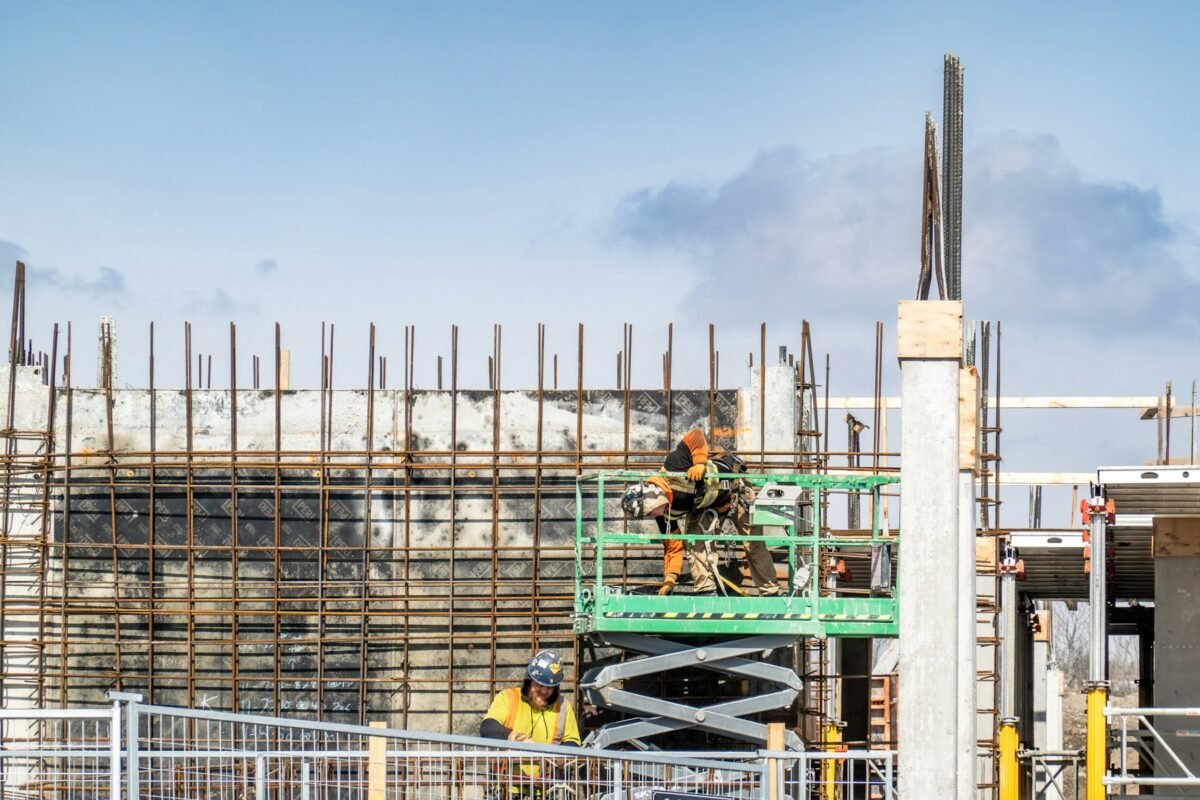
Construction project delivery with cranes illustrating AMAALA Triple Bay project controls and phased handover
Construction delivery requires the schedule, handover sequence and operational interfaces to remain aligned. Illustrative photo by Ant Rozetsky via Unsplash.

Interface management becomes the real critical path

Large destination programmes contain hundreds of interfaces between contractors and operators. The final stage intensifies those dependencies.

For example, a completed guestroom still depends on permanent power, domestic water, fire alarm integration, ICT, access control, housekeeping systems and accepted common areas. A restaurant cannot open simply because the fit-out is finished; kitchen equipment, extraction, gas or power, fire suppression, food-safety requirements, commissioning and operator training all have to be ready.

This is why integrated master schedules are essential. Contractor programmes should not sit in isolation. Key interface milestones need to be connected across packages so the programme can show when one contractor’s delay affects another contractor’s completion or the destination’s opening date.

For teams managing large Primavera schedules, Brainbay’s Project Analyzer provides a practical route to review XER or Excel project data, examine schedule quality, progress and performance indicators, and identify issues that deserve closer engineering review.

From percentage complete to readiness-based reporting

One of the most useful lessons from AMAALA Triple Bay 2026 is that project reporting needs to evolve with the phase of work.

During structural construction, teams naturally focus on concrete, steel, façade, MEP rough-in and major production quantities. Near opening, the dashboard should change. Management needs to see commissioning status, snag closure, outstanding inspections, operator actions, authority approvals, life-safety readiness and package-by-package handover.

The same principle applies to earned progress. Installed work should not automatically be treated as fully earned when the contract or rule of credit requires inspection, testing or acceptance. A reliable reporting structure distinguishes between installed, inspected, commissioned and accepted work.

If your team is still moving P6 data manually into spreadsheets for every reporting cycle, the guide on connecting Primavera P6 and Power BI for better reporting shows a more scalable way to turn programme data into management dashboards.

Sustainability is also a scheduling interface

AMAALA’s environmental commitments are not separate from construction planning. Red Sea Global says the destination is fully powered by renewable energy and is targeting a 30% net conservation gain by 2040.

For delivery teams, that means sustainability requirements can affect utility commissioning, logistics, temporary works, marine activities, waste systems, water management, landscape restoration and handover documentation. Environmental constraints can influence construction sequence just as strongly as physical access or procurement.

The lesson is straightforward: sustainability activities need real logic and ownership in the schedule. They should not be reduced to narrative lines in a monthly report.

Connectivity is part of project readiness

Destination readiness also extends beyond the resort plots. Red Sea Global completed the modernization of AlWajh International Airport in June 2026, restoring scheduled connections and strengthening access to northwest Saudi Arabia.

For planners, this is a useful reminder that an opening milestone may depend on external infrastructure that sits outside the direct construction contract. Roads, airports, utilities, transport systems and public-realm packages can all become programme-level dependencies.

What planning engineers can learn from AMAALA

AMAALA’s transition into operations offers several practical lessons for any large hospitality, mixed-use or infrastructure programme.

  1. Measure the milestone that matters. Operational opening is often more meaningful than a physical progress percentage.
  2. Plan handover early. Testing, commissioning and operator acceptance should be integrated months before the final construction stage.
  3. Control interfaces explicitly. Shared systems and cross-package dependencies need logic, owners and dates.
  4. Change the dashboard as the project matures. Production metrics are not enough near opening.
  5. Protect the audit trail. Progress should be supported by measurable quantities, inspections and approved rules of credit.
  6. Keep the live programme realistic. A schedule that shows completion but ignores unresolved operational constraints is not a useful management tool.

Turn complex project data into clearer decisions

Brainbay brings schedule analysis, progress and EVM review, baseline/update comparison and export workflows into one project-controls platform.

Explore Brainbay Platform Tools   Analyze a Primavera P6 XER file →

AMAALA Triple Bay 2026: the bigger takeaway

The most useful way to describe AMAALA today is not simply “under construction” or “complete.” It is a major destination moving asset by asset from construction into operation.

Four Seasons opened in June. Six Senses followed in July. Rosewood opened on 18 August. Red Sea Global says five more resorts are expected to join the portfolio in the coming months. At the same time, the wider destination continues to develop its hospitality, residences, marina, wellness facilities and visitor experiences.

For project-controls professionals, that transition is the real case study. It shows why the final stage of a megaproject is governed less by headline quantities and more by interfaces, commissioning, approvals and readiness.

AMAALA Triple Bay 2026 is therefore more than a Saudi tourism update. It is a practical example of how complex programmes move from a construction schedule to a functioning destination—and why strong project controls remain critical all the way to opening day.

Sources and references

Categories
AI in Construction Project Controls

AI in Construction Planning: 9 Practical Uses for Better Project Controls

AI in construction planning is becoming useful when it is applied to real project-control problems: reviewing schedules, organizing progress evidence, preparing look-ahead plans, identifying risk patterns, and turning large amounts of project data into clearer decisions. The goal is not to replace the planning engineer. The goal is to reduce repetitive work while keeping professional judgment, contractual responsibility, and data validation with the project team.

AI in construction planning for schedule review, progress reporting and project controls
AI works best when it supports a controlled planning workflow and verified project data. Photo by Valerie V via Unsplash.

Construction teams already generate schedules, RFIs, submittals, daily reports, photos, BIM data, procurement trackers, risk registers, and meeting minutes. AI can help connect these information streams, but only when the source data is reliable and the output is checked before it is used for management or contractual decisions.

What AI in construction planning should actually do

A practical AI workflow should save time, improve consistency, and make risks easier to see. It should not invent progress, change approved schedule logic, or make contractual conclusions without evidence. Good use cases start with a defined input, a clear task, and a human review step.

For a broader introduction, see my guide to artificial intelligence in construction. This article focuses specifically on planning and project controls.

1. Review Primavera P6 schedule quality faster

AI can assist a planner by reviewing exported schedule data and highlighting items that deserve attention, such as open ends, excessive constraints, unusual remaining durations, negative float, long lags, missing actual dates, or activities that do not match the expected work sequence.

The important point is that AI should flag possible issues, not automatically “fix” the programme. Logic changes can alter the critical path and forecast finish, so the planning engineer still needs to review every recommended correction against the approved baseline, actual site sequence, and contract requirements.

2. Build stronger two-week and four-week look-ahead plans

Look-ahead planning becomes more useful when activities are connected with constraints. AI can help compare upcoming schedule activities against access status, material availability, drawings, inspections, subcontractor interfaces, permits, and outstanding approvals.

A good output is not simply a list of activities due next week. It is a list of executable activities, their quantities, owners, required resources, constraints, and actions. See the practical workflow in my two-week look-ahead schedule guide.

3. Prepare progress narratives from verified data

Weekly and monthly reports often require planners to convert tables into management language. AI can draft a narrative from approved progress figures, milestone movement, critical activities, manpower trends, productivity, and current constraints.

The safest workflow is simple: validate the numbers first, lock the reporting cut-off date, provide the approved data to the AI tool, and then review the narrative line by line. AI should never be allowed to guess missing percentages or create reasons for delay that are not supported by records.

4. Organize delay events and contemporaneous evidence

Delay analysis depends on dates, notices, instructions, access records, RFIs, programme updates, meeting minutes, and supporting correspondence. AI can help organize these records chronologically and identify where supporting evidence is missing.

It can also help draft a neutral event summary showing cause, response, mitigation, and observed schedule effect. Contract interpretation and entitlement still require qualified review. For the underlying structure, use my delay event chronology guide.

5. Surface schedule and project risk earlier

AI and predictive analytics can help teams identify patterns in schedule, safety, workflow, and performance data. Oracle describes construction intelligence tools that use project data to support proactive risk identification and schedule-health analysis. The useful lesson for project controls is not that software can predict the future perfectly; it is that historical and current data can be used to highlight areas that deserve earlier attention.

See Oracle Construction and Engineering Intelligence for an example of how predictive intelligence is being applied to construction data.

6. Search drawings, RFIs, submittals and specifications more efficiently

Large projects can contain thousands of documents. AI-assisted search can reduce the time spent locating requirements, related RFIs, previous comments, or specification clauses. Autodesk, for example, describes AI-supported construction workflows for document management, issue creation, submittals, and project information.

See Autodesk construction AI software for examples of AI-supported document and project workflows.

For planners, this can be especially useful when confirming whether an activity is genuinely ready to start. The final readiness decision should still be based on the latest approved document and actual site condition.

7. Improve procurement and long-lead tracking

Procurement schedules often contain repeated stages: technical submittal, approval, purchase order, manufacturing, inspection, FAT, shipping, customs, delivery, installation, testing, and commissioning. AI can help compare these dates against required-on-site milestones and identify packages where forecast delivery threatens the construction sequence.

The planner should then review the result with procurement and site teams. A late delivery only becomes a schedule delay when it affects a required activity, milestone, or critical sequence.

8. Connect BIM, progress photos and schedule information

AI can support image classification, document matching, model review, and progress-data organization. When BIM areas, schedule activity codes, and progress records use the same location structure, teams can compare planned work with observed status more efficiently.

This is most useful when the project already has disciplined naming conventions. AI does not solve inconsistent area codes, duplicate activity IDs, or unstructured photo records. Data standards need to come first.

9. Produce clearer management dashboards and explanations

AI can help explain dashboard movements in plain language: what changed, where the variance is concentrated, which milestone moved, and what management should investigate next. This can be valuable when Power BI, Primavera P6, procurement data, and progress information are already connected through a controlled reporting process.

My guide on connecting Primavera P6 and Power BI explains the data-model and validation foundation needed before adding AI-generated insights.

A simple AI in construction planning workflow

  1. Define the decision. State exactly what the planner or manager needs to know.
  2. Control the source data. Use the approved schedule update, latest tracker, or verified report.
  3. Give the AI a bounded task. Ask it to identify, compare, summarize, classify, or draft—not to invent missing facts.
  4. Validate the output. Reconcile key dates, quantities, percentages, and references against the original source.
  5. Record the final decision. The approved programme, report, meeting record, or formal correspondence remains the project record—not the AI chat.

What should not be delegated to AI

  • Approving actual progress without evidence.
  • Changing baseline logic or contractual milestones without authorized review.
  • Making final entitlement or liability conclusions.
  • Submitting confidential project information to tools that are not approved by the organization.
  • Publishing generated claims, statistics, or references that have not been checked.

A simple rule is useful: if the output can affect payment, extension of time, safety, contractual rights, or an approved project record, it needs competent human verification.

How to start without overcomplicating it

Start with one repetitive planning task that already has a controlled input and an obvious validation method. Good examples are weekly progress narratives, look-ahead constraint summaries, schedule-quality checklists, or classification of delay correspondence.

Measure whether the workflow saves time and improves consistency. If it does, document the process and expand gradually. If it creates more checking work than it saves, simplify the task before adding more automation.

Final takeaway

AI in construction planning is most valuable as a controlled assistant for schedule review, reporting, risk identification, document organization, and decision support. The strongest results come from good source data, clear prompts, repeatable checks, and experienced human judgment.

For more practical planning and project-controls resources, visit the planning articles or review the author background.

Frequently asked questions

Can AI create a Primavera P6 schedule automatically?

AI can help draft WBS structures, activity lists, coding ideas, and logic-review checklists, but a reliable CPM schedule still requires project-specific scope, calendars, sequencing, constraints, procurement interfaces, and planner validation.

Will AI replace construction planning engineers?

AI is better suited to assisting with repetitive analysis, document handling, drafting, and pattern recognition. Planning engineers are still needed to understand site conditions, contractual requirements, schedule logic, stakeholder commitments, and the consequences of decisions.

What is the best first AI use case for a planning team?

A good starting point is a task with structured inputs and easy verification, such as converting approved weekly progress data into a draft narrative or producing a constraint summary from a look-ahead schedule.

Categories
Project Controls

Construction Progress Measurement Management Can Trust

Project Controls

Construction Progress Measurement Management Can Trust

11 August 2026 — Christian Ramos

Active construction work used as evidence for reliable progress measurement
Trusted progress starts with observable work, consistent rules and evidence. Photo by chris robert via Unsplash.

Reliable construction progress measurement gives management a factual answer to a simple question: how much of the approved scope is genuinely complete at the reporting cut-off?

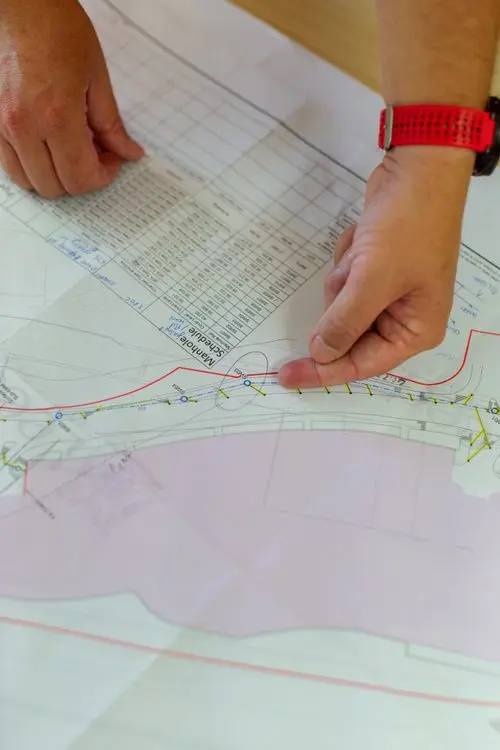
Project controls team validating construction progress measurement using site quantities

The calculation becomes difficult when drawings change, work is partially complete, quantities are uncertain, or different teams use different definitions of “done.” A strong system removes that ambiguity before the reporting cycle begins.

Define the purpose of construction progress measurement

Progress may be used for schedule control, client reporting, payment, earned value, productivity, or forecasting. These purposes are related but not identical.

For example, an activity can be physically 80% complete while only 60% is approved for payment because inspections or supporting documents remain outstanding. The report must say which progress definition it uses.

Establish a measurable scope baseline

Start with an approved scope broken down by work breakdown structure, discipline, area, activity, or control account. For quantity-based work, record the budget quantity and unit of measure.

Typical units include:

  • Square metres for flooring, cladding, waterproofing, or painting.
  • Cubic metres for concrete or excavation.
  • Tonnes for structural steel.
  • Linear metres for piping, cable, kerbs, or skirting.
  • Counts for equipment, rooms, panels, or deliverables.

If the scope baseline changes, control the revision. Do not quietly overwrite the denominator, because the reported percentage may move even when no new work was completed.

Use clear rules of credit

Rules of credit divide an activity into objective steps. This is useful when a deliverable or installation cannot be measured fairly with one all-or-nothing status.

For a typical material cycle, the weighting might be:

StepExample credit
Shop drawing approved10%
Material approved and ordered15%
Fabrication complete25%
Delivered to site15%
Installed25%
Inspected and accepted10%

The percentages are only examples. Agree project-specific rules before progress is claimed, and avoid front-loading too much credit to early steps.

Set one cut-off date

All disciplines should report against the same cut-off. Quantities installed after the cut-off belong to the next period, even if the report is prepared several days later.

Record:

  • Reporting period.
  • Data date or cut-off date.
  • Date of site measurement.
  • Schedule version.
  • Quantity-register revision.

This simple control prevents double counting and late adjustments that cannot be verified.

Require supporting evidence

Every claimed quantity should be traceable. Depending on the work, evidence may include:

  • Approved inspection requests.
  • Marked-up drawings.
  • Dated site photographs.
  • Delivery notes.
  • Survey records.
  • Signed daily reports.
  • Test results or commissioning sheets.
  • BIM model status or asset records.

Photographs support the record, but they should not replace measured quantities. Add the date, location, and activity reference.

Separate installed, inspected, and accepted progress

One of the most useful controls is to report these stages separately.

  • Installed: Physical work has been placed.
  • Inspected: The work has been presented for review.
  • Accepted: The inspection or deliverable has been approved.

This shows where production is moving faster than quality closeout and helps management focus on the real bottleneck.

Calculate weighted progress transparently

For a quantity-based activity:

Activity progress = completed quantity ÷ budget quantity

For a weighted programme:

Overall progress = sum of each activity’s weight × activity progress

Weights may be based on cost, labor hours, quantity value, or an approved blended method. The basis must remain consistent.

Avoid averaging percentages without weights. Completing 100% of a small activity should not have the same effect as completing 100% of a major work package.

Reconcile progress with the schedule

Schedule status and progress registers should tell the same story. Review differences such as:

  • Physical progress claimed without an Actual Start.
  • Completed activity with remaining duration or quantity.
  • High percentage complete but no inspection evidence.
  • Installed quantity greater than the approved budget quantity.
  • Progress claimed in an area that has not been handed over.
  • Earned value that does not match the approved weighting.

Oracle’s P6 activity status guidance describes the fields used to review duration, dates, units, costs, float, and completion percentages.

Report variance, not only the percentage

Management needs to know whether progress is ahead or behind and why.

Show:

  • Planned progress.
  • Actual progress.
  • Variance.
  • Period progress.
  • Required rate to meet the next milestone.
  • Main drivers and corrective actions.

A progress curve is useful, but it should be supported by area, discipline, or work-package detail. A single overall percentage can hide serious slippage on the controlling path.

Protect the audit trail

Keep monthly snapshots of source files and approvals. Lock prior-period actuals unless a correction is formally documented. Record who prepared, checked, and approved the data.

A reviewer should be able to reproduce the reported percentage using the saved quantity register, rules of credit, evidence, and schedule version.

Common mistakes

  • Changing weights after progress has started without approval.
  • Counting delivered material as installed work.
  • Using subjective percentages without rules of credit.
  • Mixing cut-off dates between teams.
  • Double counting rework or relocated material.
  • Updating the overall percentage without the underlying quantities.
  • Treating payment certification as identical to physical progress.
  • Reporting precision that the source data cannot support.

Final takeaway

Construction progress measurement becomes trustworthy when scope, quantities, weights, cut-off dates, and evidence are controlled consistently. The system should be simple enough for site teams to maintain and detailed enough for management to verify.

Learn more about my project controls experience or contact me for help setting up progress registers, earned-value reporting, or Power BI dashboards.

Frequently asked questions

What is the best basis for construction progress?

Use measurable quantities where possible. For engineering, procurement, testing, and closeout deliverables, use agreed milestone weights or rules of credit.

How often should progress be measured?

Daily site records support weekly control, while formal progress is commonly consolidated weekly or monthly using one agreed cut-off date.

Can physical progress exceed payment progress?

Yes. Work may be installed but not yet inspected, accepted, documented, or certified for payment. Report the definitions separately.